

Bodies in Blue: Disability in the Civil War North, by Sarah Handley-Cousins

I’ve lived with multiple disabilities my entire life. I know how society treats People with Disabilities. Men with Disabilities often have our manhood questioned, we’re seen as weak, women are generally not interested in us romantically. It’s the same for Women with Disabilities. Most People with Disabilities spent their entire lives lonely and it’s little wonder that there is a high rate of suicides among People with Disabilities.

We’re seen as burdens, as lazy, as frauds. We’re mocked, degraded, dehumanized, infantilized and we face barriers at every turn, barriers that nondisabled people don’t notice and think nothing of. We’re pressured to try to be like everyone else and we’re chided when we’re unable to do that. The constant ableism is physically and mentally exhausting for People with Disabilities.

Those of us who lived with disabilities our entire lives have always known these things. People who become disabled later in life will learn the struggles of living with disabilities. The same is true of soldiers who went to war as nondisabled people and came home with disabilities, and that is what Sarah Handley-Cousins writes about in Bodies in Blue.

Bodies in Blue covers the various ways that soldiers in the Civil War were wounded and left with life-changing conditions. Usually when people think about disabilities from war, they think about missing limbs. But the reality is, amputees are not as common as you might think, not even during the Civil War era. There are numerous other ways that soldiers are wounded and disabled for the rest their lives. I had a hard time reading about some of these wounds that Bodies in Blue talks about.

After the war, Soldiers with Disabilities go home and try to resume the lives they had before the war. But things are changed, they don’t have the same abilities anymore and they’re made to feel worthless or less than men. In many cases, their wives leave them or they’re institutionalized. Doctors don’t take them seriously when they complain about their struggles. The government ignores them when they request the pensions they deserve.

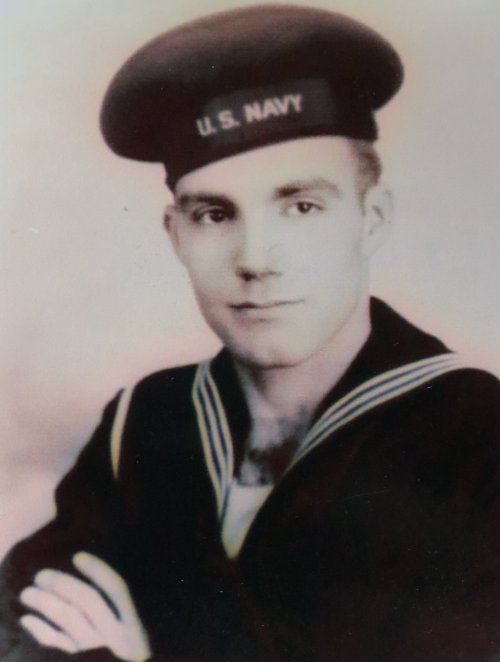
It was that way during the Civil War, and it’s that way now. I’m thinking about my uncle Gary now, who was a veteran of the Vietnam War. He had a condition where he was always shaking, so bad that he had trouble talking. When he would go to the VA for help, the doctors there would tell him he was faking his condition and send him home with nothing.

Gary died in 2002. I think he was still in his fifties when he died. Just a few years older than I am now.

I’ll leave you with this quote from Bodies in Blue.

“Disability profoundly changed the ways that soldiers existed in and interacted with their world. Soldiers praised as exemplars of Northern manhood were also mocked and segregated. They were stripped of the power to determine their own identity or to control their own bodies.”


The Elements of Style, by William Strunk and E.B. White

It has been said that every writer should read William Strunk and E.B. White’s The Elements of Style. Welp, I finally got around to that. I don’t feel this book told me much that I didn’t already know. It has advice that feels very outdated. And I rather dislike when authors push their personal preferences as if they are laws.

I suppose this book could be useful for people just starting out, but I didn’t find it very useful.

Up Yours

This finger is for the nondisabled lily-white liberals who have told me I should use kinder language when I post about Donald Trump & the MAGA morons. You think being nice to people who support Nazi ideology is going to accomplish anything?


Sewage

Trump, mad that the press is informing the People about the illegal work he’s having done on the Lincoln Memorial Reflecting Pool, posts an AI generated image of Obama, Biden and Pelosi swimming in a filthy version of the Reflecting Pool with a caption that says “Dumacrats Love Sewage.”

That’s especially funny when you consider that Trump’s Secretary of Health and Human Services, Robert F. Kennedy Jr., took his grandkids out to swim in a creek flowing with raw sewage.

I guess this is just more of that projecting that MAGA morons typically do.

John F. Kennedy

Just some thoughts that came to mind while reading Heather Cox Richardson’s report today. Because she mentioned Senator John Kennedy, that made me think about President John F. Kennedy.

People have been pointing out that the rich are bad news and they should not be running the country because they are disconnected from the rest of society. They don’t understand what it’s like to struggle financially. They’ve never had to worry about money. They’ve never had to worry about not having food or being able to pay the rent. They’ve always had everything they needed or wanted. Jim Wright reminds us that the rich always fear the poor, that the goal of the rich is to keep the poor down and that we need to stop electing rich people.

I agree. But I suppose there are a few exceptions. Weren’t the Kennedys always one of the wealthiest families in America? I feel that several members of the Kennedy family, particularly those involved in today’s government, are a threat to our nation and humanity. But from what I know about John F. Kennedy, during his short presidency, he actually did work to make life easier for people who were struggling.

Am I right about that? I didn’t experience that era. John F. Kennedy was assassinated fourteen years before I was born. I know he wasn’t perfect, and I’ve heard about his behavior when out of the public view. But when on the job, my understanding is that he devoted his time to fighting for minority communities and the poor.

Maybe that’s what got him assassinated. Did other rich people feel that he was a threat to them and their way of life? It would explain why we still don’t know for sure who assassinated Kennedy. The rich and powerful have shown us that they can and do cover their tracks.